Saturday, August 31, 2013

Privatized Crown grassland being ploughed up this week

cultivating sage brush prairie in Montana
Long before the PFRA pastures issue arose, the Saskatchewan Department of Agriculture had already begun looking for ways to sell off Crown lands, including native grasslands. In 2009 they began trying to sell the Wildlife Habitat Protection Act lands (WHPA) by seeing if they could justify removing their designation as wildlife habitat. Conservationists spoke out against the privatization and WHPA lands are still in limbo today. Meanwhile, Sask Ag. has begun selling non-WHPA Crown land, including some native grassland that supports species at risk. Many of these properties are as valuable ecologically as WHPA lands but simply were not designated. Because they were not WHPA lands the sales happened without any conservation easements to prevent the new owner from ploughing the ancient prairie.

Well, the inevitable is starting to happen. Yesterday I received news that someone in the southwest of the province is plowing land that until recently was protected under the Crown. Apparently, an Alberta farmer bought the land from a Saskatchewan resident who had originally purchased title for it from the Province and then flipped it for a profit. Local people reported that the new owner has a hired man running a 24 foot breaking plough through the sod. So far, he has broken forty acres of native grass and 160 acres of crested wheatgrass. The land in question adjoins the west flank of the Govenlock PFRA pasture and therefore supports its ecological integrity as a single block of intact native grass.

The rumour is that the owner plans to break more native grass if the land produces well enough.
He is entirely within his rights as a landowner and there is nothing any of us can do to stop it, just as someone who owns title to tropical rainforest is entitled to log it.

This is why Public Pastures--Public Interest and prairie conservationists in general believe that the best way to protect our largest pieces of Crown grassland is to keep them under the Crown. Once they are sold to a rancher the land can be re-sold to someone who wants to plough it and plant crops or destroy it in other ways for profit. Conservation easements provide some protection but the legislation leaves room for the easement to be removed if a second buyer takes it to court and demonstrates undue hardship. Also, with no one monitoring the easements the government puts on Crown land before they sell it, there is little risk for a landowner who goes ahead and plows and then asks for forgiveness later. Still, if any Crown grasslands are sold--whether it is WHPA or not--it should have a conservation easement on it.

Our cattlemen in the southwest will tell you that there are areas where virtually all of the land is being bought up by Albertans--farmers and ranchers flush with oil and cattle money from just over the border where their Province gives them better terms on Crown lease rates, as well as a bigger share of the oil and gas income extracted off their land. This leads to an uneven playing field that is virtually guaranteeing that our cattlemen are not as competitive as their Albertan counterparts and will be out-bid for land time after time.

And with our aging ranchers in the South West and few of their children able to afford the costs of getting into cattle (again in part because our Animal Unit Month rates on lease land are much higher than Alberta's, Montana's or Manitoba's), our lands are going to go to out of province land lords--some of whom many not have the same conservation ethics that have always kept our native grass intact as habitat for species at risk.

And yet I meet cattlemen who say they like to have the option to purchase outright the land they lease from the Crown so they have more control over it. Well, folks, the down side of having that right and control is that the purchaser also has the right to re-sell and when he does the new land owner might do exactly what is happening now on the West side of the Govenlock PFRA pasture.

This province is long overdue for a thorough public review of all of our Crown native grasslands--co-op pastures, Provincial and Federal community pastures, and the 7 million acres of Crown grassland leased to private cattlemen. First, to find out what we have remaining,  and then to determine its ecological value (biodiversity, carbon sequestration, soil and water conservation), its heritage resources (Metis and First Nations' ancestral sites), and its food security values, and then to decide in a full consultation with all stakeholders, how we want these incredibly valuable and endangered landscapes to be managed for the good of all and generations to come.
Val Marie PFRA pasture, image courtesy of Colin Hubick of Redhat Studios

Wednesday, August 21, 2013

Who Will Manage for Species at Risk on the First Ten Pastures to be Transferred?

Sprague's Pipit, one of 32 Species at Risk that use the PFRA community pastures (image courtesy of Alan McKeigan)

Among all of the public goods that the PFRA community pasture system has delivered to Canadians for nearly 80 years--the soil and water conservation, the support for small to medium sized cattle producers, the biodiversity, carbon sequestration, the economic and social spinoffs for rural municipalities and small communities--the one good that may be most vulnerable to the changes in management and tenure underway is the fate of the grassland species at risk (SAR) that have benefited from management programs and planning that balances their habitat needs with grazing requirements.

The private cattle producers who end up buying or leasing the community pastures, no matter how well intentioned, will not have the means to continue the SAR programming that made the PFRA system a model in ecologically sustainable grassland management.

Buried in Agriculture Canada's science publications web pages is a news item on "Agricultural Biodiversity" that praises the Community Pastures Program (CPP), its Biodiversity Extension Specialists, and its protection of species at risk. Not sure why it is still online but this is part of what it says:
"CPP encompasses - and here's where the harmonious co-existence part comes in - the grazing of 210,000 cows, calves, bulls and horses on lands containing fragile grassland ecosystems and many SAR. The grazing of cattle is symbiotically tied to the survival of many SAR. For example, the Burrowing Owl chooses habitat that is grazed low enough to spot predators and depends on the dung of large herbivores such as cattle to line its nest. Tools developed for the CPP include a calendar that lists the periods of the year when SAR are most sensitive to disturbance, factsheets on various species, interactive maps, and recommendations for setbacks for infrastructure. The unit (part of the Agriculture and Agri-Food Canada Agri-Environment Services Branch) also works with provincial conservation data centres and other specialists to ensure they are using the best information available."
So, what about the first ten community pastures scheduled to be transferred to Saskatchewan this fall and placed in the hands of cattle producers? Do any of them have species at risk? Yes, they do. In fact, nine of the first ten have recorded SAR as the following table shows:


Pasture
District
Species at Risk
Park
North Battleford
None found
Fairview
Rosetown
Burrowing Owl, Ferruginous Hawk, Sprague’s Pipit
Newcombe
Rosetown
Burrowing Owl, Ferruginous Hawk, Sprague’s Pipit
Lone Tree
Swift Current
Burrowing Owl, Ferruginous Hawk, Sprague’s Pipit, Swift Fox
Wolverine
Watrous
Short-eared Owl, Sprague’s Pipit
McCraney
Watrous
Common Nighthawk, Whip-poor-will
Ituna Bon Accord
Foam Lake
Monarch, Peregrine Falcon
Excel
Weyburn
Burrowing Owl, Ferruginous Hawk, Piping Plover, Sprague’s Pipit
Keywest
Weyburn
Burrowing Owl, Piping Plover, Sprague’s Pipit
Estevan-Cambria
Weyburn
Burrowing Owl, Ferruginous Hawk, Sprague’s Pipit (F.Hawk successful nest in 2012)


Burrowing Owl, also by Alan McKeigan

How will the grazing patrons who take over responsibility for these pastures maintain the SAR protection and planning done by the PFRA? Is it fair to expect them to look after endangered species on these pastures without giving them the wherewithal to do it? If a species at risk on their pastures begins to decline rapidly or disappears, will the Species at Risk Act apply, will conservation organizations begin to pressure them to adjust stocking rates or protect den or nest sites? Will the Province take responsibility even though there is no provincial legislation protecting SAR on provincial lands?

Lyle Stewart, Saskatchewan's Minister of Agriculture, has said repeatedly that the SAR will continue to be protected, but he has not said how that will happen. Stewart's own web site shows the Hansard pages where he makes this astounding claim, saying "Species at risk will continue to be protected on these lands as it is on all privately or publicly owned land in Saskatchewan". Here is SAR expert Andrea Olive responding in the Saskatoon Star-Phoenix to Stewart's repeated assurances that SAR will be protected.

I know the pasture patrons are asking how that will happen, and folks in Nature Saskatchewan, Nature Canada, and other conservation NGOs are asking the same thing.

If you care about the Burrowing Owl, Swift Fox, Loggerhead Shrike, Ferruginous Hawk and the many other rare and endangered animals and plants on these lands, you should be asking too.

Long-billed Curlew in stipa grass (image courtesy of Hamilton Greenwood)

Saturday, August 10, 2013

Article on the PFRA pastures in "Country Guide"

Auvergne--Wise Creek PFRA Pasture south of Swift Current

When we did the tour in June hosting BirdLife International dignitaries Margaret Atwood, Graeme Gibson, Ian Davidson and Alberto Yanosky (of Paraguay), a writer from Country Guide magazine came along and took notes. Anne Lazurko, a farmer and writer from southeastern Saskatchewan, finished the article and had it published last week in Country Guide. She and her editor were kind enough to give me permission to provide a link to the piece. Here is a quote from the middle of the article:


The Community Pasture Patrons Association of Saskatchewan, chaired by rancher Ian McCreary, joined forces with PPPI to bring attention to the issue. It’s a smart strategy. If Canadians care about saving burrowing owls, swainson’s hawks and prairie dog colonies, and they understand that managed grazing ensures habitat for these species, it might go a long way in convincing the federal government to slow down the process and listen to patron concerns over the business end of things.

CPPAS Chair Ian McCreary talking to Graeme Gibson on the tour (image courtesy of Branimir Gjetvaj--see http://branimirphoto.ca/)
McCreary is convinced a solution can be found if government is willing to back off on its timeline. Patron groups are to have business plans for ownership in place by this fall in order to keep the pastures out of the hands of third parties. But McCreary says the government has failed to provide those groups with the information they require to go forward.
Meanwhile, Sheri Monk, a journalist from southwestern Saskatchewan, has written a powerful editorial on the PFRA community pastures and posted it on her site. She called it "How the Cookie Crumbles." Here is a quote:

Everybody benefits from the PFRA projects, and to suddenly expect a handful of people to completely finance them is akin to asking the village of Piapot to take over all costs associated with the TransCanada Highway between Maple Creek and Tompkins. It’s utterly reprehensible, and this attack on rural Saskatchewan cannot be tolerated and make no mistake – dismantling the PFRA is precisely what this is – an attack.

Common Nighthawk, one of 31 species at risk on the pastures that the Federal government is washing its hands of by cutting the PFRA Community Pastures and its endangered species programming

Tuesday, August 6, 2013

New website for pasture patrons (and a video with some inspiring images)


pasture patron meeting, January 23, 2013 (from CPPAS website)
The Community Pastures Patrons Association of Saskatchewan (CPPAS), which has the support of committees from the majority of the federal community pastures being transferred to Saskatchewan, has put together a website. It has photos, their mission statement, membership information, links and news, including coverage of their recent media release, where they asked for another year to work out the details of the transition.

The patrons whose cattle have been grazing these 62 pastures in the province--some of them for generations--have the greatest personal stake in what ends up happening to them. The strange thing about the position the patrons are in is that we all know that they have that personal connection to the pastures and so we are all keen to say we support them or listen to what they are saying. Both conservationists who favour public ownership as well as the larger cattle interests who want to see the province privatize or lease the pastures will often refer to the pasture patrons and say they believe the patrons should be listened to. But is anyone really listening to what they have to say? This website is a chance to hear them without any interference from the other interests out there. Making and maintaining websites takes work for anyone but for a group of mixed farmers and ranchers who are busy haying and getting ready for the fall, doing something like this in their spare time is a sign that they would like to be heard.

The patrons I have met have varying views on ownership versus leasing, but I think it is fair to say that a majority prefer the pasture system continuing in a model similar to what has existed under the PFRA (Prairie Farm Rehabilitation Administration) system. Anyone who claims they are listening to the patrons must begin by listening to the members of CPPAS who have made it clear that the Province and the Federal Government have not been giving them the information they need to make any decisions or plans.

Here is a news release quote from Joanne Brochu, a patron from Colonsay whose organizing efforts got CPPAS underway originally: "The community pasture system has been in place for three generations.It is not reasonable for governments to expect patrons to pull together business plans during the four busiest months of the growing season especially in light of the list of outstanding issues yet to be resolved by governments."


Meanwhile, here is a four minute video montage from the BirdLife International Tour of the PFRA pastures that PPPI (Public Pastures-Public Interest) organized in June. The footage includes shots from the Val Marie Community Pasture, the largest pasture in the system at more than 90,000 acres. The bison shots come from nearby Grassland National Park. No voices other than the wordless testimony of the grass and the birds. The video was put together by Red Hat Studios of Regina.


Sunday, July 28, 2013

Some miscellaneous thoughts and bits of news on grassland, PFRA pastures, etc


1.        
this Hereford calf was grazing in non-native grass just east of Regina
"Thank you for your comments on the proposed updates to The Provincial Lands Act.  Your comments have been received and will be reviewed in the coming weeks and considered as the new legislation is drafted. 

Your input and advice are most appreciated.

Regards,
Wally Hoehn
Provincial Lands Act Review"
1. A couple of days ago the deadline passed for getting in public responses to ideas about changing Saskatchewan’s Lands Act. Why does it need changing? Maybe to do a better job of protecting our shared investment and common interest in healthy ecosystems on the millions of acres of land that we own together? Nope. The Saskatchewan Agriculture web page inviting comments on the discussion paper they have put out says "The Provincial Lands Act is outdated, making it more challenging for Government to meet clients' needs." Yep. We have to change the way we manage land to "meet clients' needs." For "clients" read the resource industry and others who want to make an income using the land. Of course there is nothing wrong with private income made on public lands, but it has to be on terms that protect the wider long term public interest in the health of those lands.

So there were meetings in Prince Albert, Saskatoon and Regina to introduce the discussion paper and get public input, but by choosing mid-summer to discuss these matters, the Province is clearly hoping to avoid any real public participation or scrutiny. Not to be deterred, Public Pastures—Public Interest, the Saskatchewan Cattlemen’s Association and other important stakeholder groups attended the meetings and sent in written responses before the deadline. Impossible to say exactly where this is headed, but I am mighty suspicious that the direction has very little to do with protecting the public good and a lot to do with liberating private interest. And, by the way, why is it that Sask Agriculture is always the department driving this kind of thing? Don't we have an Environment Ministry?

2.       2. When you get a moment, take a look at Richard Manning’s essay on the virtues of grass farming. Published by OnEarth magazine a couple of years ago, the essay, entitled “Graze Anatomy,”  gives a convincing account of how grass-farming can make a huge contribution to reducing our carbon footprint in North America while providing healthier meat (better balance of fats) for consumers and bringing greater ecological wellbeing to the Great Plains. I got to meet Manning a few years ago when he came to speak at the University of Regina. He is one of America’s best environmental writers and he understands what has happened in this part of the continent, the prairie, which he calls “an ecological sacrifice zone.”
Loggerhead Shrike on the Davin Moraine native grassland east of Regina


in a tame pasture east of Regina


 3. Here is a bit of a scoop—if you are a reader of Western Horseman, keep an eye out for an issue this fall or winter about the PFRA cowboys. WH is one of the world's biggest horse and cowboy culture magazines and boasts 200,000 subscribers. Last week, one of their writers came to Saskatchewan to ride along with a PFRA cowboy, touring his pasture and talking about the tradition of the PFRA, and its horseback managers and riders. Should be good.

4. Finally, some photos from bird trips this summer. First, a shot of a Marbled Godwit I saw on my Tyvan Breeding Bird Survey route. Good mix of birds this year, including two Sprague’s Pipits, a Grasshopper Sparrow, and 18 Upland Sandpipers!!


Marbled Godwit
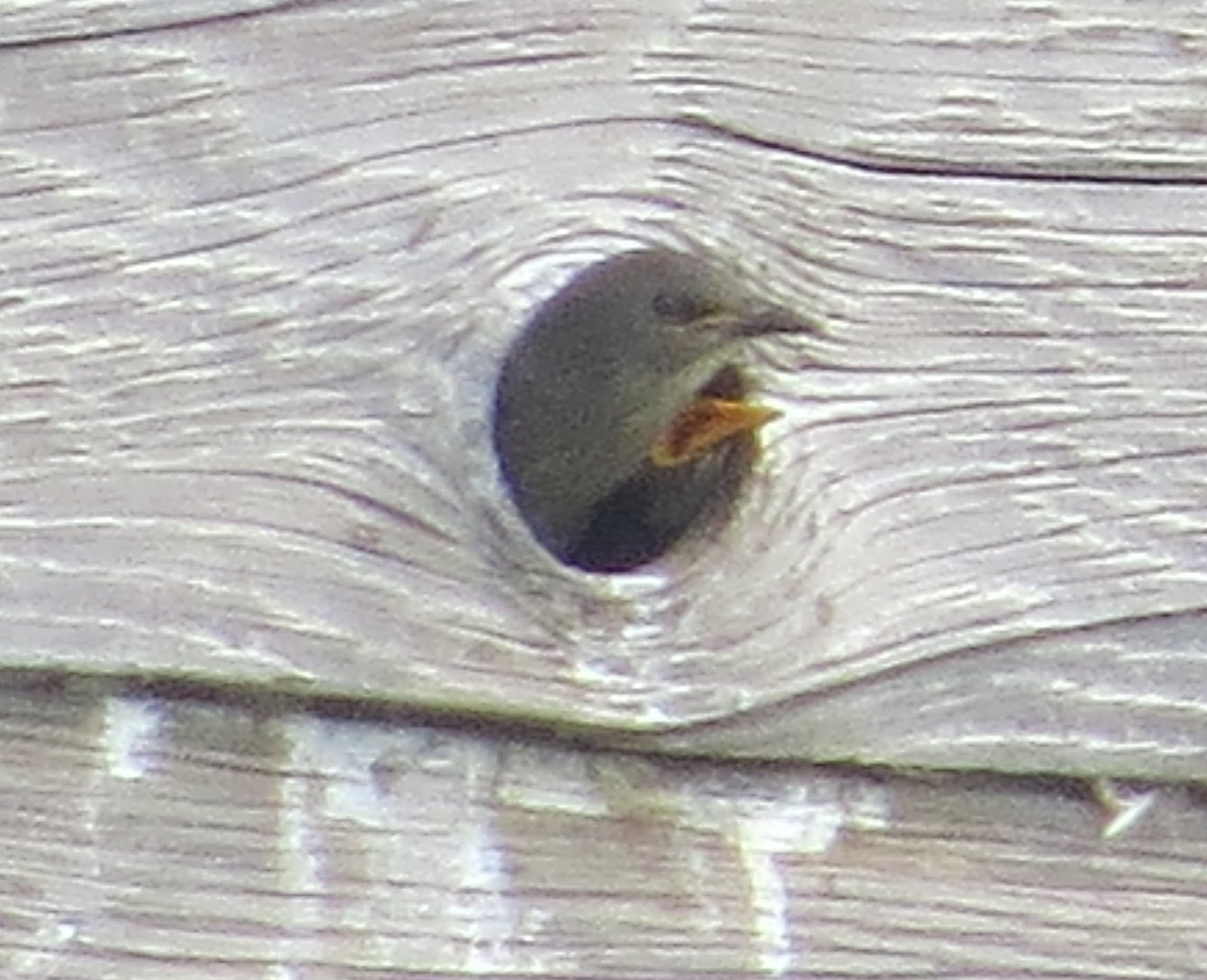
I never did find out what this bird was nesting in the side of an old granary. Zooming the photo in did not help. I thought it was a house wren until I got home and looked again. Brewer's Blackbird maybe? Anyone know?


4.  

The next two shots show dozing Common Nighthawks in the picnic area of Two Trees Trail in the West Block of Grasslands National Park. A threatened species, the nighthawk has something of a stronghold in Saskatchewan’s Frenchman River Valley. They love to snooze on horizontal branches and fences when they get a chance. At the Val Marie PFRA pasture manager’s yard, we recorded 22 of them flying back and forth over a patch of trees.


Also managed to get a shot of a Ferruginous Hawk just south of the West Block. . . .

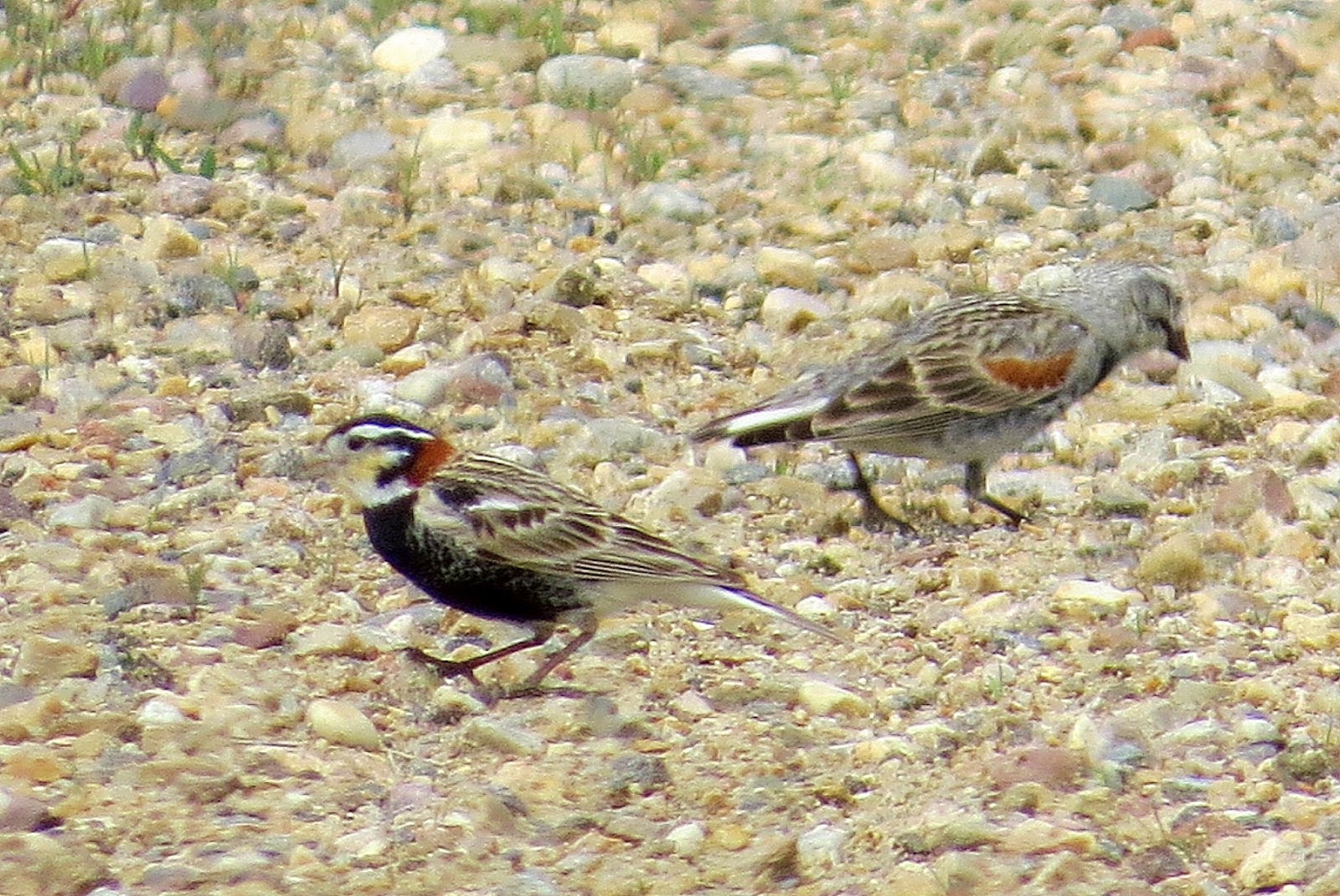
And in the same area, these two longspurs. First images shows a Chestnut-collared on the left and McCowns on the right, both males. The final photo shows the McCowns by itself. Both are on Canada’s Species at Risk list and are declining. McCown’s is endemic to the northern Great Plains and Saskatchewan has most of its breeding range, so we are especially responsible for maintaining its habitat. 

Share this post

Get widget