|
| folks gathered to write letters to save White Butte (from Global TV) |
Like many people, I sometimes find myself bemoaning the
state of democracy in the world today, but it only takes the leadership of one
responsive and responsible elected official to remind me that an engaged public
of informed citizens can still carry the day.
At the end of March, when the Hon. Mark Docherty, Minister
of Saskatchewan Parks, Culture, and Sport announced in the media that there
would not be a golf course made at White Butte Recreation Site, there were
about three thousand Regina and district folks who were digging in for a
battle. The news took everyone off guard in the best possible way, and people
who were appalled that the Province would even consider such a proposal were
expressing surprise that Minister Docherty and the Saskatchewan Party came
through with the right decision so quickly.
So what is the take home message
here? Well, part of it seems to be that Docherty is an elected representative who
takes his democratic responsibilities seriously and includes all members of the
public in a single unitary category of the citizenry he represents, rather than
sorting them into friends and enemies.
It is important to note another force at play here, demonstrating that the system does work if we use it. Public accountability depends on opposition and scrutiny in the legislative assembly. In this case it was provided ably by the NDP's Trent Wotherspoon, who did a fine job raising the question in the legislature and supporting the public interest in protecting White Butte.
It is important to note another force at play here, demonstrating that the system does work if we use it. Public accountability depends on opposition and scrutiny in the legislative assembly. In this case it was provided ably by the NDP's Trent Wotherspoon, who did a fine job raising the question in the legislature and supporting the public interest in protecting White Butte.
 |
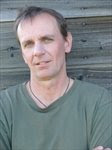
| Hon. Mark Docherty, MLA Regina - Coronation Park and Minister of Parks, Culture and Sport |
But the main lesson here is that
the public sent a clear signal to all of our legislative representatives. The traffic on Facebook, Twitter and stories
in the conventional media got a lot of attention, but in the end I think it was
the letters, emails, and phone calls to the Ministry that helped the Provincial
Government to see that many people value the public amenities and ecological
heritage of the native prairie at White Butte.
All of which is good news for the
1000 acres at White Butte so important to Regina Saskatchewan
Why is that? Well, first, the
threat is not as clear and present as a golf course proposal. For the 62
federal community pastures, there is the threat of sale at some point down the
road and there is the loss of publicly-accountable governance and management as
each pasture is leased out to private grazing corporations or co-ops.
These are major threats to some
of the most ecologically-significant landscapes in Western
Canada , but they are just not big and bold enough for many people.
Read that sentence above starting with “For the 62” and you can feel your
interest drifting when you hit “publicly-accountable”. A couple more phrases like
that and you are snoozing or clicking onto other things more compelling.
But the main reason the public
has not been as engaged as they could be has to do with access and experience. We love White Butte because we walk there, ride
horseback there, and store memories there. By contrast, for most Saskatchewan
Public Pastures – Public Interest (PPPI), the non-profit that led the charge defending White Butte, is hoping that
over time there will be more public access to at least some of the community
pastures, but right now access is nothing but a burden on the private cattlemen
who have suddenly been saddled with the responsibility of caring for the public
values on these rare grasslands.
Managed properly, with support
from the Province, increased public access to some of the community pastures
could help people to understand the way grazing, carbon sequestration and
biodiversity can work together; to see that cattle, when managed well on native
grass, are good news for the environment.
 |
| image from Parks Canada website |
If the governance structure and
management model made room for it, there could be safe and controlled access allowing
people to hike or ride horseback through some of these beautiful plains and
coulees, and welcoming First Nations people to experience a prairie one step
closer to the world their ancestors knew. It happens on Provincial Grazing
Reserves in Alberta and on public grazing
lands in Montana
But that will never happen unless
we ask for it. If you like exploring White Butte, you can be sure you would love
to spend time at the many undiscovered prairie places with names like
Caledonia-Elmsthorpe, Auvergne-Wise Creek, Wolverine, Battle Creek, and
Govenlock.
The volunteers at PPPI have
launched a new letter-writing campaign aimed at getting 1000 letters to Premier
Brad Wall, letting him know that Saskatchewan
Please take a few minutes to write and then pass this on to
everyone you know who might also like to help.
 |
| image courtesy of Angie Evans |


-10.jpg)

.jpg)

.JPG)

.JPG)


 Posts
Posts